Barry Lyndon (1975)
Stanley Kubrick spent three hours telling the story of a man who gets everything he wants and finds nothing waiting there. Ryan O'Neal is Redmond Barry, an Irish nobody who lies and charms and marries his way into the English aristocracy, lit by real candlelight and watched over by a narrator who already knows how it ends. The pick for the week of June 19, 2026.
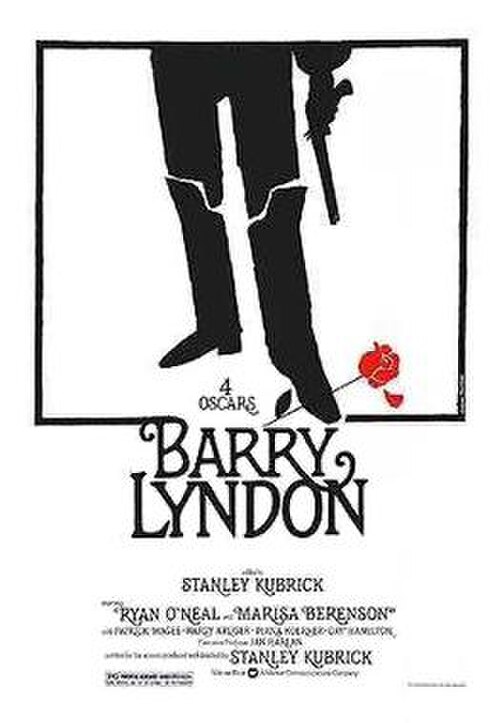
- Director
- Stanley Kubrick
- Year
- 1975
- Runtime
- 3h 5m
- Country
- United Kingdom
- Rated
- PG
- Genre
- Drama
Chat aired
Friday, June 19 at 7:30 PM PT
This conversation has already happened. Catch the current week’s pick on the homepage.
See this week’s pick →Why we picked it.
Barry Lyndon is a movie about a man who wins everything and feels nothing. Redmond Barry starts as an Irish boy with no name and no money, and over three hours he lies, duels, gambles, and marries his way to a title and an English estate. Kubrick refuses to let a single step of that climb feel like a triumph. There is no rousing music when Barry wins, no swell when he arrives. The higher he rises, the smaller and lonelier the frame makes him look. It is the slowest, most patient film we have ever picked, and that is the point. It moves at the speed of a life.
Then there is the way it looks. Every frame looks like an oil painting because Kubrick lit it like one. The interiors were shot by candlelight on lenses NASA built for photographing the dark side of the moon, no electric light at all, so the rooms glow the way a room actually glowed in 1775. Watch the slow reverse zoom Kubrick uses again and again, starting tight on two people and pulling back until they are tiny figures in a vast green landscape or a gilded hall. The camera keeps reminding you how small the human story is against the time and the scenery around it.
We have spent the last few weeks on what people risk and what they fail to say. Heat asked what you would give up for the work. Field of Dreams asked what you waited too long to say to your father. Serpico asked what it costs to be honest when honesty makes you the problem. Barry Lyndon asks the coldest version of the question. What does it cost to spend your whole life climbing toward something that turns out to be empty.
What to watch for. No spoilers.
It was shot by candlelight.
Kubrick wanted the night interiors lit only by flame, so he used a set of lenses originally built for NASA, the fastest ever made. No movie before or since looks quite like it. Watch a candlelit card game or supper scene and notice that nothing is lighting the faces except the wax on the table.
The narrator gives away the ending.
A dry, knowing voice tells you what is about to happen before it happens, including the worst of it. Kubrick does this on purpose. Once you are not waiting to find out what happens, you start watching how it happens, and how little control Barry ever really had.
Watch the camera pull back.
Over and over, Kubrick opens tight on a face or a gesture, then slowly zooms out until the people are small inside the landscape. It is the whole movie in one move. The closer you look at Barry, the more the world dwarfs him.
A closer read.
The film is built in two clean halves, and the title card between them tells you what they are. The first is the rise. The second begins with the words that he would have a son, and from there it is the fall. Kubrick gives the ascent and the collapse the exact same unhurried weight, which is its own quiet argument. Getting there and losing it look almost identical when you film them this patiently. The same rooms, the same manners, the same candlelight, just running the other direction.
Thackeray called his novel The Luck of Barry Lyndon, and luck is the engine of the whole thing. Barry is not especially clever or especially good. He is bold, and for a long time the dice fall his way, and then they stop. The movie is honest about something most rise-and-fall stories flatter away. Position is mostly fortune, the cards you were dealt and the day you happened to walk into the right room, and the man who believes he earned it is the last to see how much of it was chance.
The candlelight is not only beautiful, it is doing thematic work. Flame is the most temporary light there is. It flickers, it gutters, it goes out. Kubrick films an entire vanished world by the one light source that cannot last, and the effect is that the whole gorgeous eighteenth century feels like it is already disappearing while you watch it. Notice how often a scene ends with a candle being snuffed or a fire dying down.
The last act turns on a duel, the same way the first act did, and the symmetry is the knife. Barry's stepson, Lord Bullingdon, has hated him from the start, and the final confrontation between them is one of the most agonizing scenes Kubrick ever shot, slow and formal and almost unbearable. Watch what Barry does in that barn when he finally has the clear shot. The one decent choice he makes in the whole film is the one that ruins him.
That line is the film's last title card, and it lands like a door closing. Everyone you just watched scheme and climb and duel for three hours is now equally dead, equally forgotten, leveled by the only thing that levels everyone. Most of us are running a smaller version of Barry's climb right now, chasing a title or a number or a room we are not yet allowed into, sure that arriving will feel like something. Barry Lyndon is three hours of arriving, and it is the loneliest film about success ever made. Watch it slow. It was built to be watched slow.
If you like Barry Lyndon, you will probably like:
Discussion seeds.
You do not have to use these. Most chats find their own ground. But if Friday starts slow, try one.
- Barry spends the whole film climbing toward a title and an estate, and Kubrick never once lets it feel like a win. Is there something you have chased that felt smaller than you expected once you finally had it.
- The narrator tells you the ending early on purpose. Did knowing how it turns out change how you watched, and would you rather have been surprised.
- The one selfless choice Barry makes is the thing that destroys him. Have you ever done the decent thing and watched it cost you more than the selfish thing would have.
Aired June 19, 2026
See this week’s pick.
Go to homepage →