Fargo (1996)
A car salesman who is in trouble he will not name hires two strangers to kidnap his own wife, and the plan comes apart within a day. Then a seven months pregnant police chief drives out to three bodies in the snow and starts asking careful questions. The pick for the week of August 28, 2026.
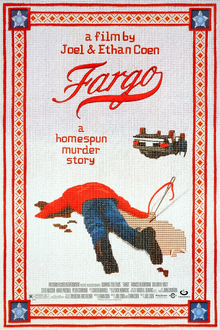
- Director
- Joel Coen and Ethan Coen
- Year
- 1996
- Runtime
- 1h 38m
- Country
- United States
- Rated
- R
- Genre
- Crime, Drama
Chat aired
Friday, August 28 at 7:30 PM PT
This conversation has already happened. Catch the current week’s pick on the homepage.
See this week’s pick →Why we picked it.
Fargo is a crime movie told from the point of view of the person who cleans up after it. Jerry Lundegaard needs money, and rather than ask his rich father in law for it he hires two men he has never met to kidnap his wife so he can split the ransom. It is a plan that only works if everyone behaves reasonably, which is the one thing people in a Coen movie never do. Within a day there are three bodies on a road outside Brainerd and Jerry is still smiling at customers on the lot.
What makes it more than a good thriller is who the Coens send to investigate. Marge Gunderson does not appear for the first half hour. When she does she is seven months pregnant, eating in her parka at the side of the road, and she is the smartest person in the movie by a wide margin. The Coens built a film full of greedy, panicking men and then handed it to someone who is simply good at her job and happy at home. That is the joke and also the whole argument.
It is very funny, and the comedy never lets you off. The politeness, the yah sure you betcha, the long silences over a plate of eggs, all of it keeps running while the violence gets worse. Barton Fink and Blood Simple are colder. Fargo has warmth in it, and the warmth is what makes the last twenty minutes land. You cannot be shocked by cruelty unless the movie has shown you something worth protecting.
What to watch for. No spoilers.
How long Marge takes to arrive.
Thirty three minutes of men lying to each other before the movie introduces its hero. By then you are exhausted by Jerry. Marge walks in and the film finally has ground under it. Notice how much better you feel the moment she starts talking.
William H. Macy's face.
Jerry is not a criminal, he is a coward with a scheme, and Macy plays every scene as a man who thinks he is one sentence away from fixing it. Watch him in the parking lot with the ice scraper. That is the entire character in one shot.
The marriage.
Marge and Norm, the stamp, the night crawlers, the dinner in front of the TV. The Coens keep cutting back to a small ordinary happiness while everyone else destroys themselves for money. It is not filler. It is the point of comparison.
A closer read.
The opening title card says the film is a true story and that names were changed at the request of the survivors. None of that is true. The Coens made it up. They have said they wanted the audience to watch it the way you listen to a story someone swears really happened, which changes what you accept. The lie is doing real work, because you forgive a strange plot if you think it actually occurred.
Jerry never says what he needs the money for. Not once in ninety eight minutes. Debt, a bad deal, something at the dealership, we are never told. That absence is deliberate and it is why the movie is not really about a scheme. It is about a man who cannot ask for help and would rather do something monstrous than admit he is in trouble.
Watch how the violence is staged. Almost all of it is sudden, badly done and over quickly, filmed in flat daylight or headlights with no music to carry it. There is nothing cool about any of it. Carl and Gaear are not professionals, they are two unpleasant men who are bad at this, and the movie refuses to make them impressive.
Then there is the speech in the squad car at the end, when Marge tells the man in her back seat that there is more to life than a little bit of money, and that she just does not understand it. It is the closest the Coens have come to saying what they think out loud, and they give it to a woman in a police parka on a snowy afternoon rather than to anyone with power.
The last scene is Marge and Norm in bed talking about a three cent stamp. After everything, the movie ends on two content people and a small piece of good news. Fargo spends ninety minutes showing you what people will do for money and then closes on the thing money was never going to buy. Watch it once for the plot and the wood chipper. Watch it again for how carefully the Coens earned that ending.
If you like Fargo, you will probably like:
Discussion seeds.
You do not have to use these. Most chats find their own ground. But if Friday starts slow, try one.
- We never learn what Jerry needed the money for. Does that make him more sympathetic or less, and would knowing have changed how you watched him.
- Marge is happy, competent and completely ordinary, which is rare for a lead in a crime film. Did she work as a hero for you, or did you find yourself more interested in the people falling apart.
- The film claims to be a true story and is not. Did you know going in, and does a movie owe you the truth about that.
Aired August 28, 2026
See this week’s pick.
Go to homepage →