Heat (1995)
Michael Mann's Los Angeles crime epic, and the first time De Niro and Pacino shared a frame on screen. The pick for the week of May 29, 2026.
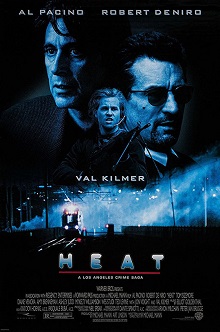
- Director
- Michael Mann
- Year
- 1995
- Runtime
- 2h 50m
- Country
- United States
- Rated
- R
- Genre
- Crime drama
Chat aired
Friday, May 29 at 7:30 PM PT
This conversation has already happened. Catch the current week’s pick on the homepage.
See this week’s pick →Why we picked it.
Heat is a movie about the work. About what you give up to do the thing you are best at. Vincent Hanna lives in his cases the way Neil McCauley lives in his scores, and Mann shoots both men with the same patience, the same color of light. Nobody is the villain here. That is what makes the diner scene mean something. Two men sit across from each other and finally say it out loud.
It runs almost three hours and earns every minute. There is a stretch in the middle that is just people driving, looking, planning. Give it your full attention and that quiet builds into one of the loudest twelve minutes in American cinema. Give it half and you will think nothing happens. Pick a night this week when the house is calm and put your phone in another room.
There are real choices in this film. People disagree, often loudly, about the ending. About who Hanna is to his stepdaughter. About what McCauley owes Eady. Heat does not give you answers. It asks you what you would have done.
What to watch for. No spoilers.
The light.
Dante Spinotti shoots Los Angeles like a city built out of glass and sodium. Watch the night exteriors. The blues and the oranges do something on screen you cannot photograph by accident.
The score.
Elliot Goldenthal underlines the silences, not the action. The cue called Of Helplessness plays exactly once in the film. Notice where.
The crew dinner.
Halfway through, McCauley's people sit down to eat. No score, no edits to the heist. Mann is showing you what is at stake before he asks you to lose it.
A closer read.
Mann had been carrying this story for sixteen years before he made it. He shot a smaller version in 1989 for television called L.A. Takedown, with a smaller cast and a smaller budget, just to see if the script worked. It did and it did not. The bones were there but the patience was not. By 1995 he had the money and the cast to slow the whole thing down.
What he made is one of the last great American films built for adults who will sit still. There are no franchise hooks, no quips, no winking at the audience. Mann trusts that you came to watch a movie. The film trusts that you can sit with two men eating coffee and follow what is unsaid.
De Niro at this point in his career was working at the highest level of subtraction. He plays McCauley like a man who has already decided. Watch the scene where Eady, played by Amy Brenneman, asks him about his life. He answers her honestly and the honesty is colder than any lie. Pacino is doing the opposite. Hanna talks too much, sleeps too little, runs hot in front of suspects on purpose. They are two performances about discipline pointed in opposite directions.
The diner scene that everyone remembers is six minutes long. They shot it in one location with two cameras and no master shot. The actors had never done a scene together before that day. What you are watching is two of the best living screen actors meeting for the first time on film and deciding, on the fly, what their characters owe each other.
If you have seen Heat before, watch it for the women this time. Diane Venora as Justine Hanna, Ashley Judd as Charlene Shiherlis, Amy Brenneman as Eady. The film is often described as a movie about men, and it is, but Mann gave the women the room to push back. Their scenes are short and they are not throwaway. The conversation on Friday almost always ends up here.
If you like Heat, you will probably like:
Discussion seeds.
You do not have to use these. Most chats find their own ground. But if Friday starts slow, try one.
- Does Hanna want to catch McCauley, or does he want to know him. Is there a difference for him.
- McCauley's rule is to walk away in thirty seconds. He breaks it. Is the break tragic, or is it the only honest thing he does in the film.
- The women in this film all stay or leave for reasons that have nothing to do with money. Pick one and say what she actually wants.
Aired May 29, 2026
See this week’s pick.
Go to homepage →