Serpico (1973)
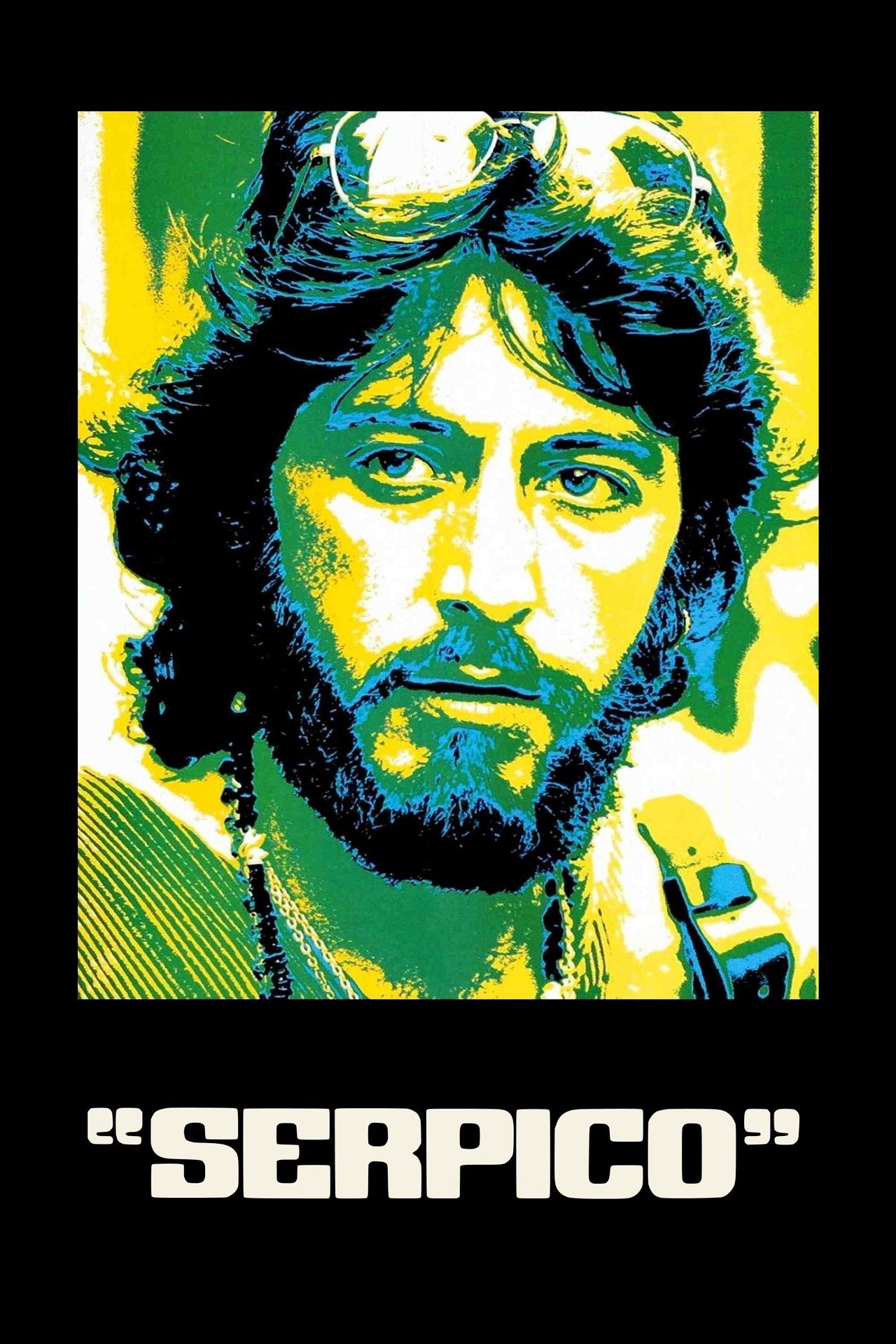
Sidney Lumet's New York runs on small envelopes of cash, and Frank Serpico is the one cop who won't take his. Al Pacino, a beard, and a true story about what it costs to be the only honest man in the room. The pick for the week of June 12, 2026.
- Director
- Sidney Lumet
- Year
- 1973
- Runtime
- 2h 10m
- Country
- United States
- Rated
- R
- Genre
- Drama
Chat aired
Friday, June 12 at 7:30 PM PT
This conversation has already happened. Catch the current week’s pick on the homepage.
See this week’s pick →Why we picked it.
Serpico is a movie about being the only person in the room who won't take the money. Frank Serpico is a New York cop in the late sixties and early seventies, a time when nearly every cop he meets is on the take. He isn't a crusader. He doesn't lecture anyone. He just won't put the envelope in his pocket, and that quiet refusal turns every partner, every precinct, every friend into a potential threat. The corruption is not really the villain here. The silence around it is.
Sidney Lumet shot this in the real city, more than a hundred New York locations, no studio gloss, and you can feel the grime in every frame. Watch what Al Pacino does with the part. This is early Pacino, before the role became a brand, and he is completely alive. The beard and the costumes change as Serpico goes deeper undercover and as the years grind on. The beard is a calendar. Track it and you track how much the job is taking from him.
There are real choices in this film, and they are not the satisfying movie kind. Serpico could stay quiet and collect like everyone else. He could take a desk and look away. Heat asked what you would risk for the work. Field of Dreams asked what you waited too long to say. Serpico asks something harder. What would it cost you to be honest when honesty makes you the problem.
What to watch for. No spoilers.
The beard is a calendar.
Serpico starts clean-shaven and ends nearly unrecognizable. The hair and the disguises are not just undercover cover. They mark time, and they mark how far he has drifted from the clean-cut rookie who joined to do good.
Early Pacino, fully alive.
This is two years before Dog Day Afternoon and the year after the first Godfather. Watch how little he does in the loud scenes and how much he does in the quiet ones. The performance is all listening and waiting, then sudden heat.
Lumet's real New York.
No backlot. Over a hundred real locations across all five boroughs, shot in sequence-bending chaos. The city is not a backdrop, it is the second lead. Notice how the apartments, stairwells, and diners do half the storytelling.
A closer read.
Serpico is a true story, and the real Frank Serpico was still alive when the film was made and is still alive now. Peter Maas wrote the book a year after Serpico testified before the Knapp Commission about systemic corruption in the NYPD. The film compresses years into a little over two hours, but it does not soften the central fact. A man told the truth about the people he worked with, and the people he worked with never forgave him.
The loneliness is the real subject. Every time Serpico confides in someone, that person becomes a risk. A friend, a superior, a lover. The film keeps narrowing his world until there is almost no one left he can trust. Watch how Lumet stages the precinct scenes, the way other cops look at him, the small silences. The danger is rarely loud. It is in the room before anything happens.
There is a line in the world of this film that inverts the whole moral universe. Who can trust a cop who doesn't take money. To the men around Serpico, his honesty is not virtue, it is unpredictability. A cop on the take is a known quantity. A cop who refuses is a man who might talk. The film makes you sit inside that logic until it almost makes sense, which is the most frightening thing about it.
The last act turns on a single moment of backup that does or does not come. The film does not editorialize. It shows you the door, the hallway, the seconds, and lets you draw the conclusion. By then you understand that the question was never whether Serpico was brave. It was whether the system would let an honest man survive inside it.
Watch it once and you remember Pacino and the beard. Watch it again and you remember how alone he is. Most of us have been in a smaller version of that room. A meeting, an office, a group where everyone had quietly agreed to something and you were the one who couldn't. Serpico is what that feels like at full scale, with a badge and a gun and no way out.
If you like Serpico, you will probably like:
Discussion seeds.
You do not have to use these. Most chats find their own ground. But if Friday starts slow, try one.
- Serpico could have stayed quiet and collected like everyone around him. What makes a person refuse the easy path when refusing turns them into the problem.
- The film never lets you forget how alone he is. Watching it, did his honesty feel worth what it cost him, or did you find yourself wishing he would just look away.
- Have you ever been the only one in a room unwilling to go along with something everyone else had quietly accepted. What did you do.
Aired June 12, 2026
See this week’s pick.
Go to homepage →